News & Updates
A log of talks, publications and releases. Most recent first.
September 2026 — climatehealth passes 2,000 downloads
The climatehealth R package — the reference implementation of the six UN-endorsed climate-health indicators — has passed 2,000 CRAN downloads since its April 2026 release.
6–8 August 2026 — Glasgow 2026: the NSE UK Engineering Convention
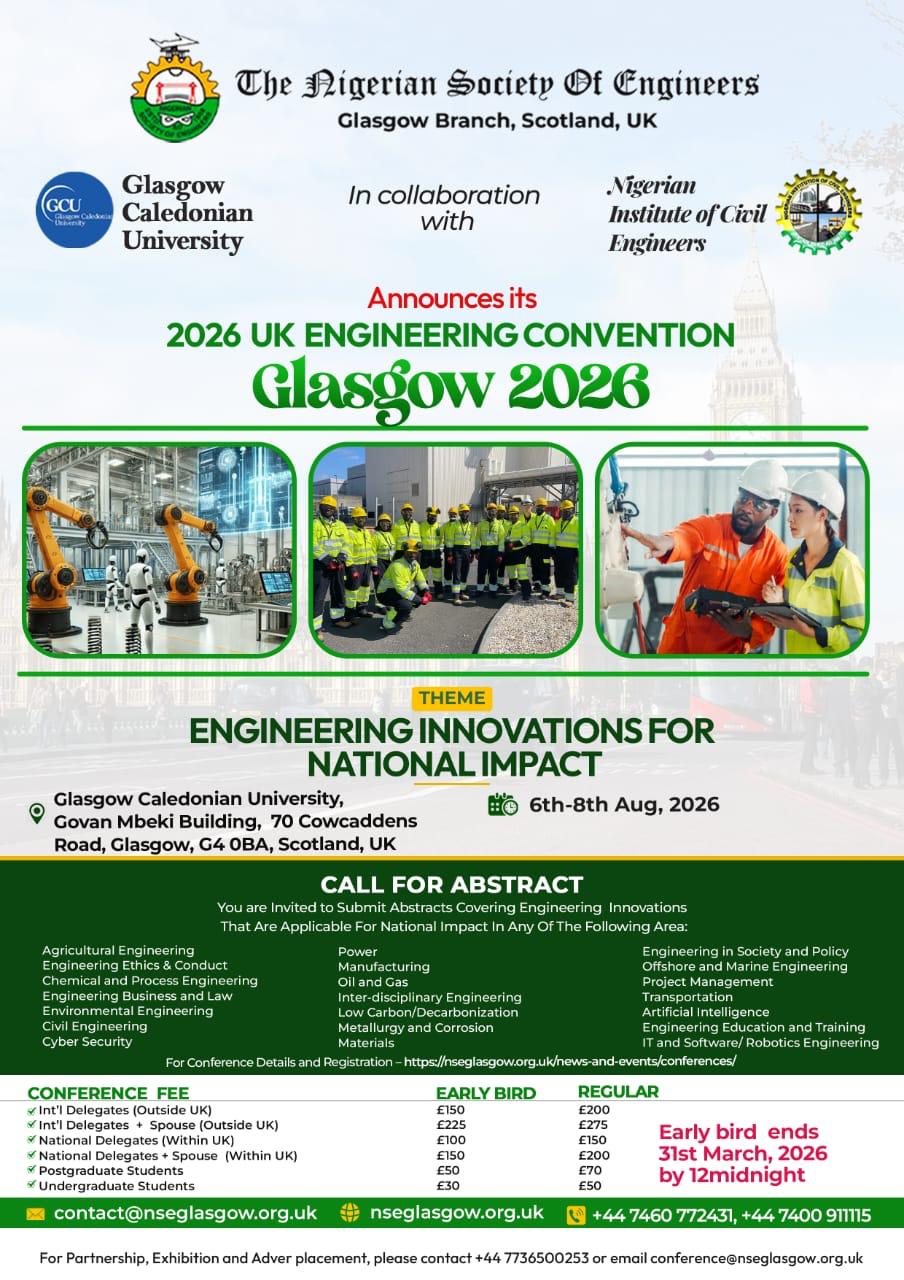
Technical lead for the Nigerian Society of Engineers Glasgow branch’s three-day international convention, Engineering Innovations for National Impact, held at Glasgow Caledonian University with GCU and the Nigerian Institution of Civil Engineers. Addresses came from Nigeria’s Minister of State for Works, the Deputy Governor of Lagos State, a member of the Federal House of Representatives, and NSE national officers.
I designed the technical programme, ran the abstract review, produced the Book of Abstracts, recruited and briefed the UK plenary speakers, and moderated the flagship panel on AI and economic growth. Papers are due for publication on the branch website. I also co-authored three of the papers presented, on memory-aware edge AI, machine learning for electricity demand forecasting, and bio-inspired soft robotics.
My Day 1 session, AI for Every Engineer, built a working seven-day electricity demand forecaster and supply planner live on stage in twenty minutes. Write-up →
25 April 2026 — Technical webinar: The Intelligent Engineer
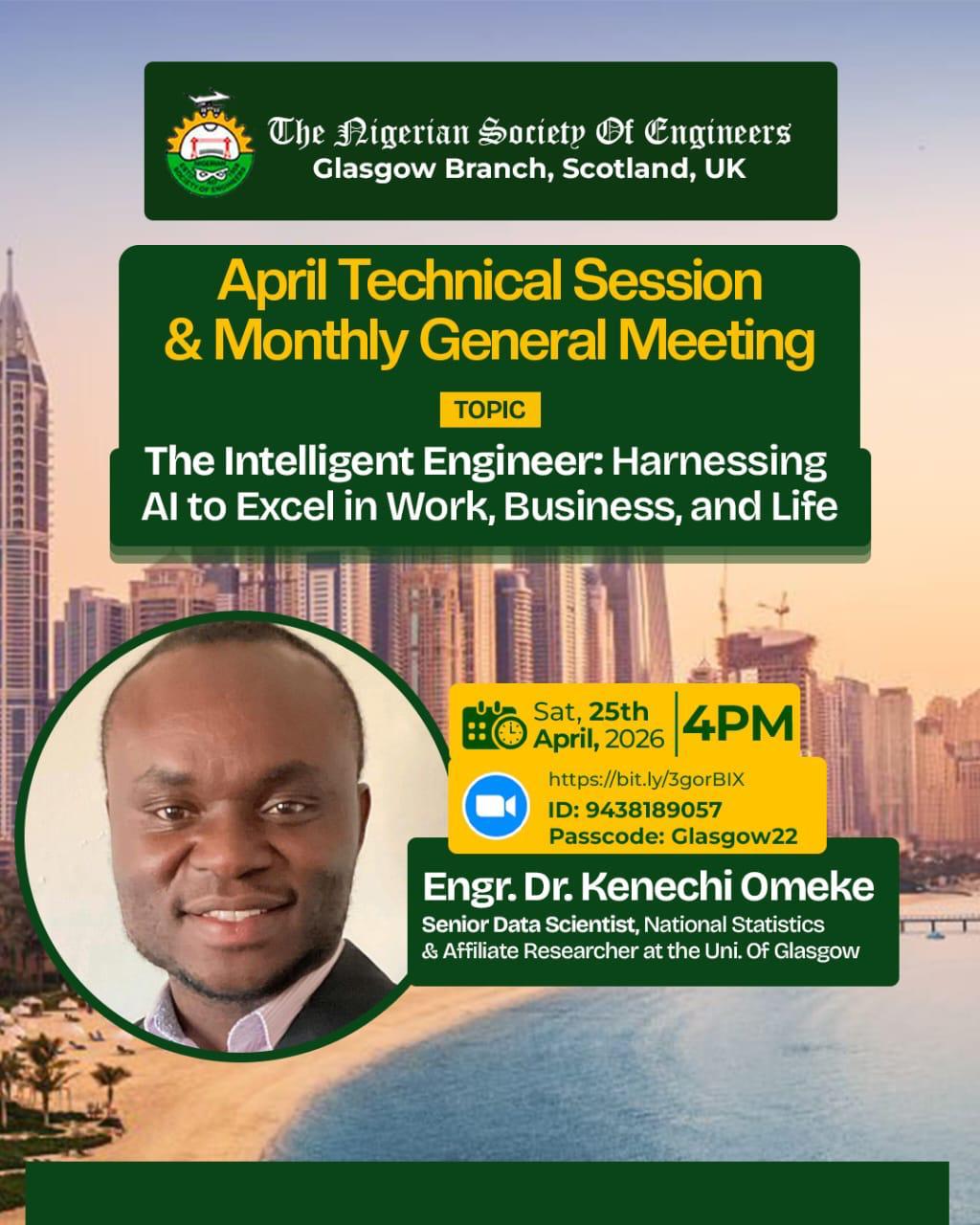
A 90-minute live webinar for the NSE Glasgow branch — The Intelligent Engineer: Harnessing AI to Excel in Work, Business, and Life — structured as four levels of practical AI use: the Content Engine, the Career Accelerator, the Research Companion and the Builder. Demonstrated live across Claude, ChatGPT, Google NotebookLM and Claude Code, ending with a document-grounded chatbot built from scratch during the session.
Every tool used was free or had a free tier, and every demo was designed to be reproducible by an attendee the same day. Get in touch if you would like the prompt script or a recording.
March 2026 — Two IoUT preprints on arXiv
- “Machine Learning for the Internet of Underwater Things: From Fundamentals to Implementation” — arXiv:2603.07413
- “Energy-Efficient Hierarchical Federated Anomaly Detection for the Internet of Underwater Things via Selective Cooperative Aggregation” — arXiv:2603.24648
March 2026 — UN Statistical Commission endorses the SOSCHI methods
At its 57th session in New York, the United Nations Statistical Commission endorsed the six SOSCHI climate-health indicators for inclusion in the Global Set of Environment and Climate Change Statistics.